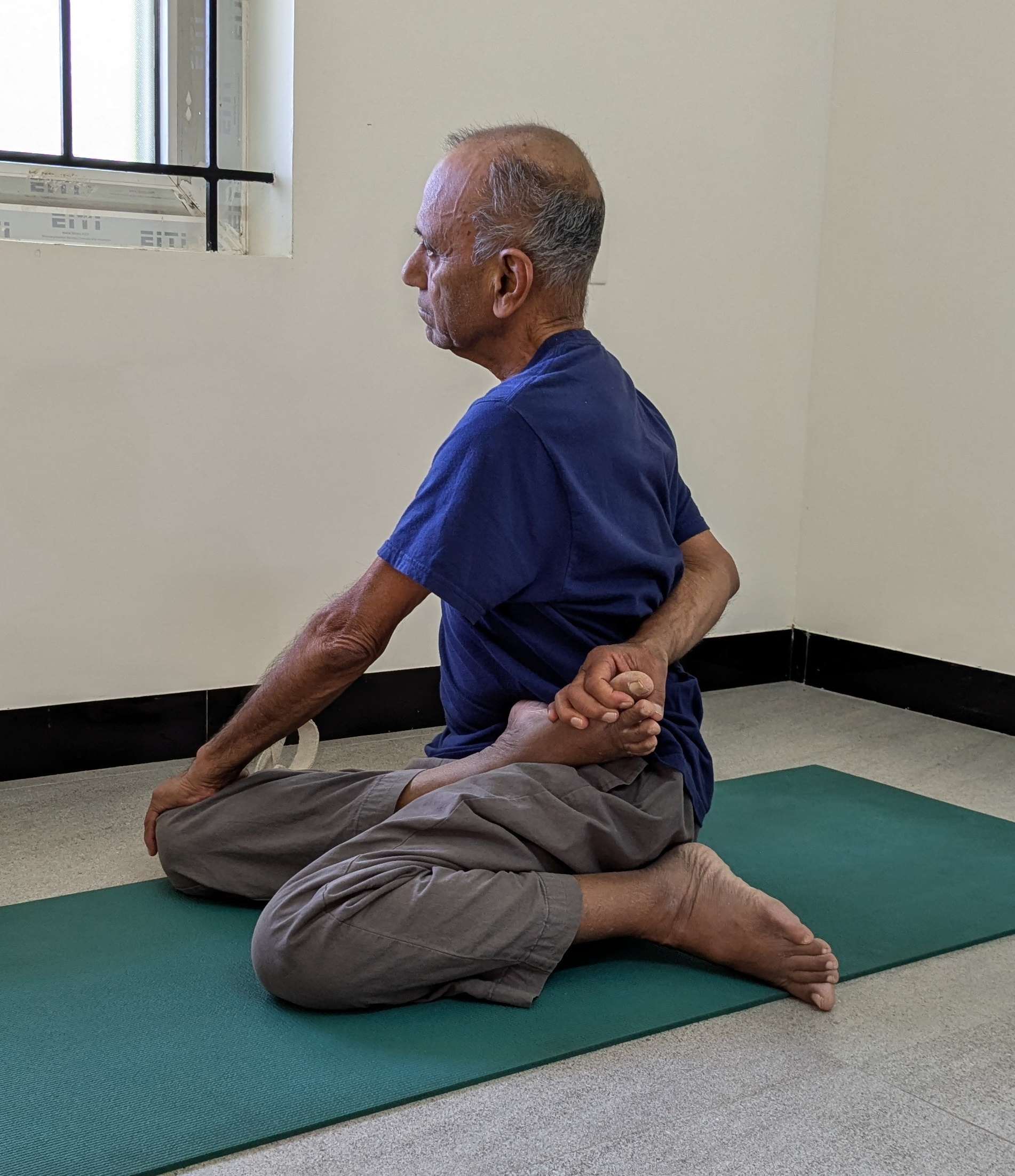
Asanas that involve a spinal twist are known to offer many benefits. The most commonly listed benefits include improved blood circulation in the body, enhanced mobility and range of motion of the spine, managing discomfort or pain in the lower back, detoxification and cleansing of the organs. One of the most commonly practiced asanas in this category is the Ardha-matsyendrasana. In this article, I will be discussing the twisting asana called the Bharadwajasana (bhāradvājāsana – भारद्वाजासन).
This asana is named after one of the well-known ancient rishis (sages). Rishi Bharadwaj was one in the group of seven rishis known as sapta-rishi. He was the father of the famed Dronacharya, the teacher for both Pandavas and Kauravas in the epic story of Mahabharata.
I hope you will enjoy practicing with me using the video demonstration.
Bharadwajasana
This is an intermediate level asana and involves flexibility in the spine, hips, knees and shoulders. For our practice, we’ll do two variations of the asana. The first variation will prepare us for the second and the final version of the asana. For the practice, it will be helpful to have a strap as well as a cushion, a pillow or a folded blanket handy.
Variation 1
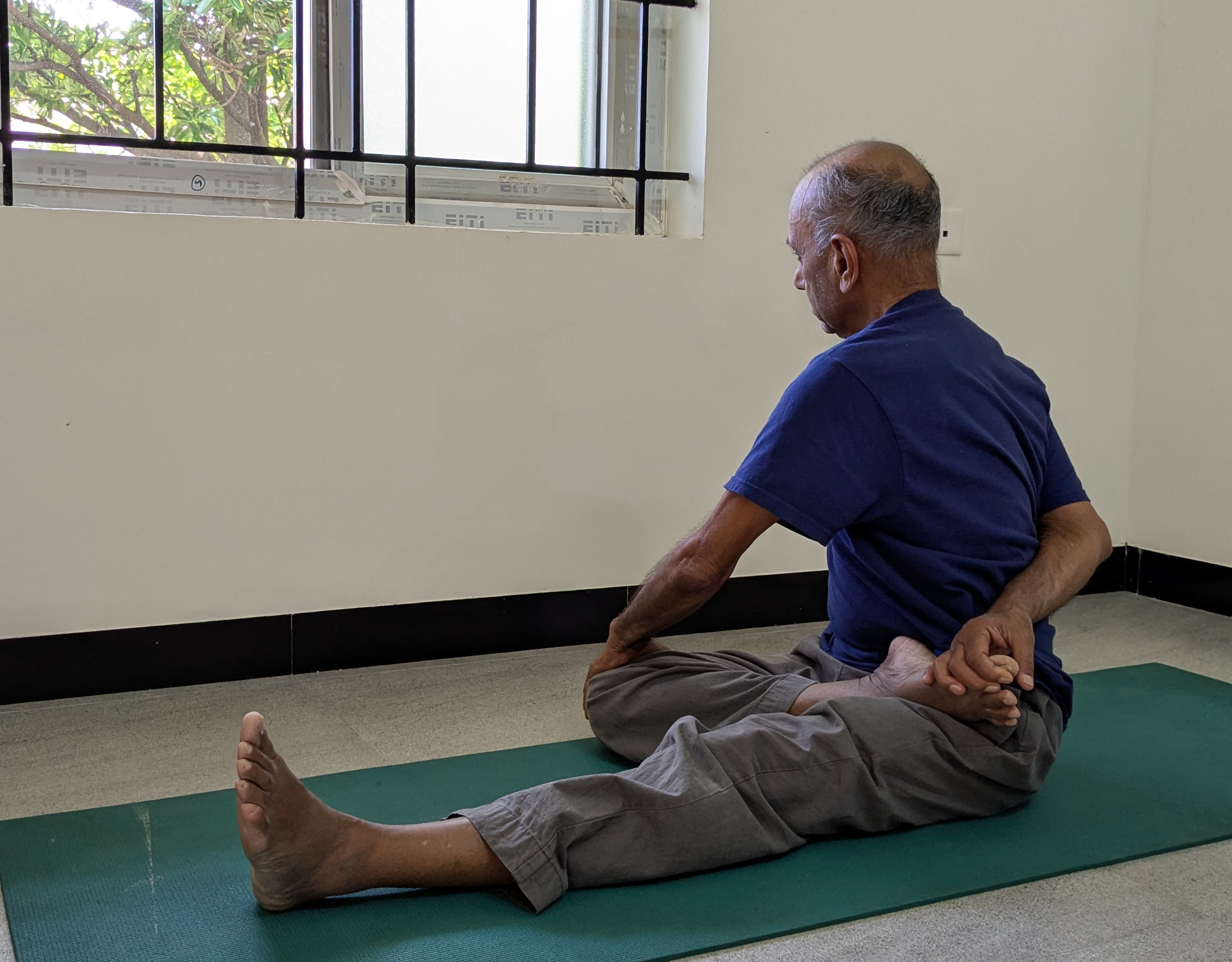
- Begin by sitting down with the legs stretched straight in front.
- Fold the left leg and position the left foot on top of the right thigh, bringing the foot as far back as comfortable on the thigh.
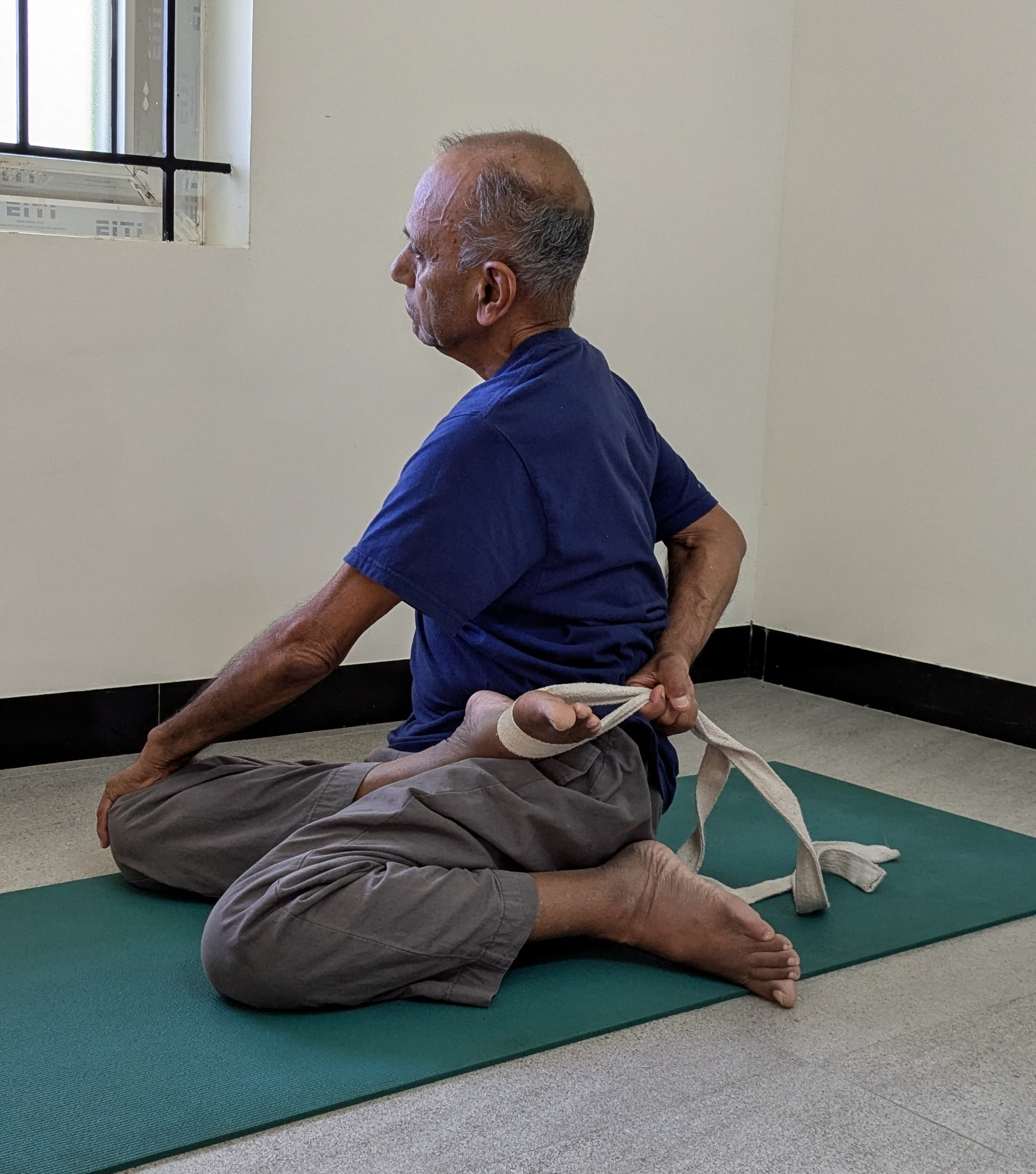
- Wrap the left arm behind the back and make an effort to grab the big toe of the left foot with the left hand. This is where the use of the strap my come in handy. If the hand is not able to reach the foot, put the foot in the strap and grab the strap with the left hand. Try and hod the strap as close as possible to the left foot.
- Place the right hand on the outside of the left knee and gently pull the knee inward.
- We’ll try to keep the spine tall and upright. To maintain this position, while inhaling, gently pull the head up toward the ceiling. While exhaling, deepen the twisting experience by rolling the left shoulder back and at the same time pulling the left knee inward with the right hand.
- Maintain the final position for a total of about 5-7 breaths. Finally, release the pose and sit again with both legs stretched in front.
- Now, fold the right leg and place the right foot on top of the left thigh, sliding the foot all the way back to the thigh joint.
- Repeat the same movements as given above in steps 3-6 in the opposite direction.
- Sit in the cross-legged Sukhasana position and relax for a few breaths.

Bharadwajasana-variation-strap
Variation 2
- For this variation, start by sitting with both the legs stretched out in front.
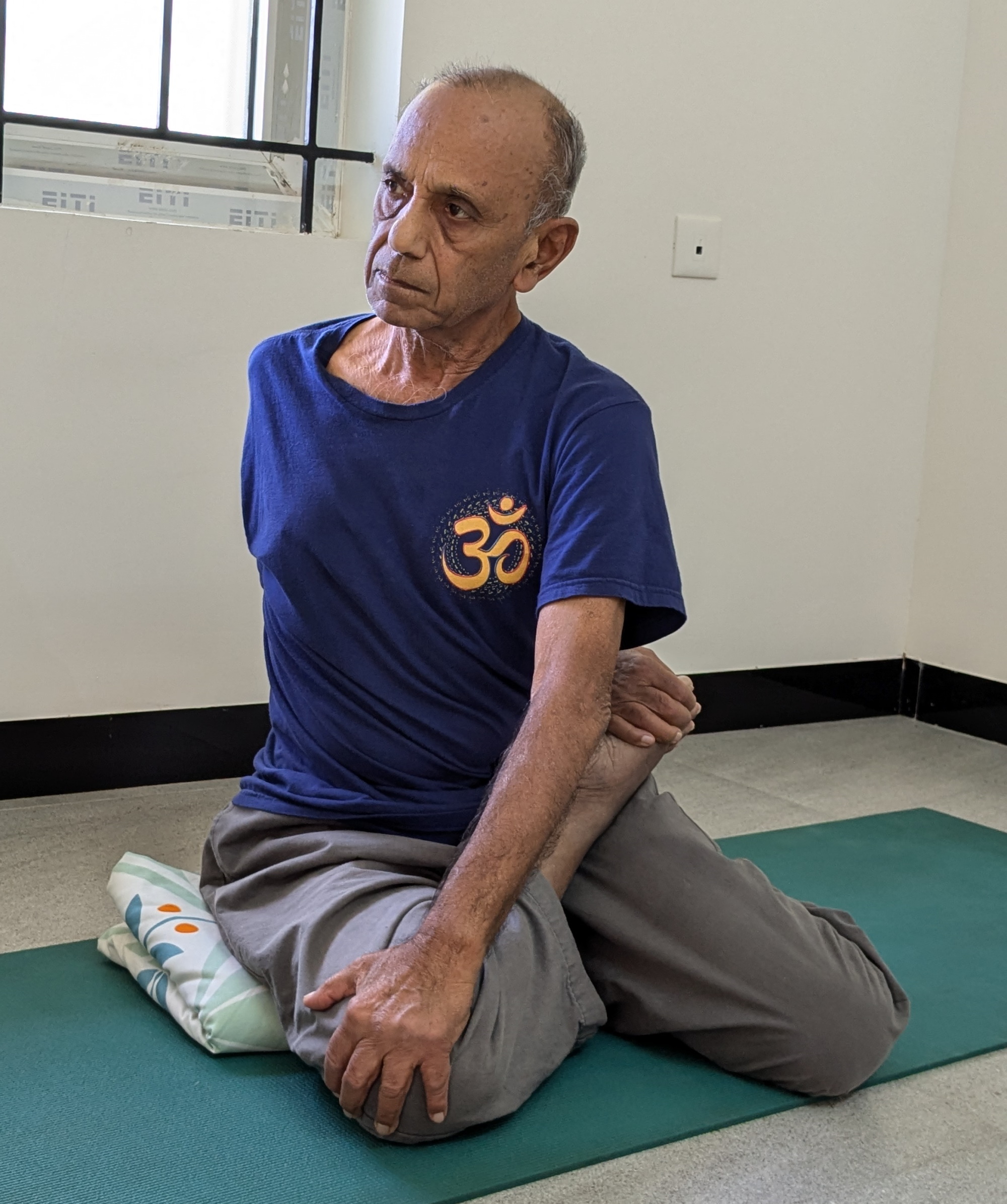
- Keep the right leg stretched out in front. Fold the left leg so the left foot is positioned on the outside of the left hip. This is similar to the sitting posture called Virasana.
- Place the right foot on top of the left thigh (half lotus) and slide the heel all the way back. We’d like to keep both the hips on the ground. However, if your knees, hips or thighs are tight, you may not be comfortable placing both hips on the floor. This is where you may need the use of a cushion or a folded blanket under your right hip. This will help raise the right hip enough so both the hips are resting on the ground.
- Now, wrap the right hand behind the back and try to hold the big toe of the right foot which is on top of the thigh. If the hand does not reach the foot, use a strap just as we did in variation 1 earlier. Put the foot in the strap and grab the strap with the hand. Try and hod the strap as close as possible to the foot.
- Place the left hand on the outside of the right knee.
- We’ll try to keep the spine tall and upright. To maintain this position, while inhaling, gently pull the head up toward the ceiling. While exhaling, deepen the twisting experience by rolling the shoulder back and at the same time pulling the right knee inward with the left hand.
- Hold the position for about 25-30 seconds, if comfortable; then, release the pose and slowly get back to the Vajrasana.
- Repeat the above moves now on the other side.
- When you are done with both sides, relax in Sukhasana for a few breaths.
Benefits
- Massages abdominal organs including the liver, spleen, pancreas and kidneys
- Stretches the shoulders, knees and the hips
- Stimulates the brain
- Relieves backache and hip pain
- Strengthens and stretches the spine
- Helps relieve constipation and flatulence and improves digestion
- Helps with sciatica
- Relieves menstrual discomfort
- As all the nerves go through the spine, the twisting and stretching of the spine helps make the nerves stronger resulting in better communication between the brain and every cell of the body, both for sense perception and motor action.
Contraindications
- Serious back or spine injury: Perform this pose only under the supervision of an experienced teacher.
- Fluctuating (uncontrolled despite medication) High or low blood pressure
- Migraine or other headache
- Diarrhea
I would love to get your feedback.
Recent Comments