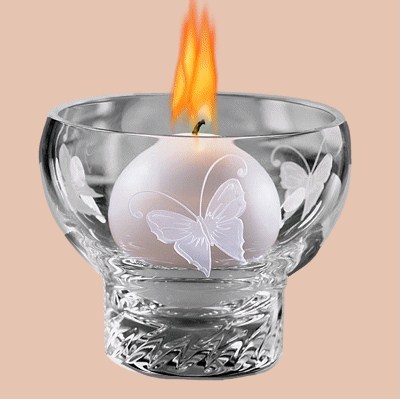
Trataka (त्राटक) is one of the six cleansing techniques mentioned in the Hatha Yoga Pradipika, the classical text on the practices of Hatha Yoga. The six techniques are: Neti (nasal cleansing), Basti (yogic enema), Dhauti (digestive tract and intestinal cleansing), Kapalabhati (breathing technique involving forced, short bursts of exhalation), Nauli (abdominal churning) and Trataka (eye cleansing and concentration).
Trataka defined
In an effort to find the origin or the derivation of the word ‘trataka’ I tried looking it up in the dictionary. Surprisingly, however, when I checked Apte’s dictionary I couldn’t find the word there. In Monier-Williams also it just states that it is a yoga technique for cleansing the eyes – nothing about its meaning or how the word is derived. In his commentary on the Hatha Yoga Pradipika, Swami Muktibodhananda simply states that Trataka means to gaze steadily at an object.
In shloka 2.31 of Hatha Yoga Pradipika Trataka is defined as "looking intently with an unwavering gaze at a small point until the eyes begin to tear, is called Trataka by the great teachers".
Trataka can be either internal or external; that is the object that is gazed upon can be an internal object (for example the third eye) or an external one (for example the flame of a candle). In general, however, the most commonly practiced form of Trataka involves gazing at a candle flame. That is the technique that I will be describing in this article.
Trataka technique
- Light a candle and place it on a small table around 3 to 4 feet in front of you.
- Sit in a comfortable posture with the spine upright and the arms and shoulders relaxed. You can assume any meditative posture which you can maintain without any movement for the duration of the Trataka practice.
- Make sure that the flame is at the level of your eyes. Also, make sure that you are facing the candle directly without having to turn the neck even slightly.
- It is important that the flame remains steady during the concentration routine. So, make sure that there no breeze around of any kind to disturb the flame. If needed, turn off any fans or air conditioner in the room.
- Take a few deep breaths to relax. Close the eyes and watch your breath as you inhale and exhale for about five to seven breaths. This will allow the breath to settle down and bring you into the present moment.
- Now, gaze at the flame intently and keep your gaze on it without getting distracted towards outer disturbances and thoughts.
- Keep your vision focused and steady on the flame without blinking, for as long as it is comfortable to you. Try to avoid any kind of body movement during the entire practice.
- Keep your gaze anchored on some part of the flame, rather than the candle or wick. If thoughts come up in the mind, just become aware of them and then ignore them. Try to maintain your awareness and focus on the flame.
- Continue to gaze at the flame until you cannot keep your eyes open and tears start flowing. Once this happens, close your eyes.
- When you close the eyes, you may be able to visualize an after-image of the flame with closed eyes. Try to bring this image at the point between the eyebrows at the center of the forehead (the third eye location).
- The depth and level of your concentration will determine how clear the after-image is. If you cannot visualize the after-image of the flame with closed eyes, or it wavers constantly or looses clarity, then re-apply your concentration to restore the position of the after-image.
- When the image begins to fade out completely, bring your awareness back to your breathing and begin to watch the flow of breath at the tip of the nose for about 7 to 8 breaths.
- You can open your eyes at this point and repeat the full gazing routine as given above one more time.
In the beginning you may feel that the eyes begin to water after only a few minutes. However, with practice, your eyes will be able to continue the gaze for longer periods and you can practice Trataka for up to twenty minutes or so.
Benefits of Trataka
Shloka 2.32 of the Hatha Yoga Pradipika states "Trataka eradicates all eye diseases, fatigue and sloth and closes the doorway to these problems". Some of the benefits associated with Trataka are:
- Improves eyesight and vision.
- Improves concentration, intelligence and memory.
- Excellent method as preparation for mantra meditation.
- Enhances self-confidence, patience and willpower.
- Develops greater work efficiency and productivity.
- Calms the mind and provides inner peace and silence.
- Brings greater clarity in mind and improves decision-making ability.
- Helps to overcome mental, behavioral and emotional ailments.
- Provides stress relief and deep relaxation.
- Deepens the sleep and cures sleep related disorders such as headache, insomnia, nightmares, etc.
- According to Gherand Samhita (shloka 5.54), Trataka promotes clairvoyance or perception of subtle manifestations.
Tips for Trataka Concentration
- Trataka is best practiced on an empty stomach during early-morning hours or late evening hours just before going to bed. If you practice it during the daytime, make sure that the room is dark so that focusing on the flame is easier.
- Try getting a decent sized flame by adjusting the size of the wick. It will help in achieving a better after-image of the flame and it will be easier to visualize it with improved concentration.
- Do not strain your eyes while gazing on the flame. The eyes adjust naturally in due course of time and it becomes easier to concentrate and gaze on the flame for longer periods of time.
- As I mentioned earlier, because Trataka develops deep focus and concentration, it is used as a very effective pre-meditation stage. At the end of the Trataka routine, you may continue with your own mantra meditation.
Hi Sir,
I am 48 years old and have myopia in both eyes. I have been practicing trataka without glasses for the last two weeks with an 8mm diameter black bindi on the wall. However, I have to keep the bindu on the wall only about 10 inches away as my prescription lenses are of -5.0 power and I am unable to focus on anything beyond 10-11 inches away. Is this okay? Can I keep the bindu (8mm) so close to me? Will keeping the bindu so close hamper my trataka practice? Please guide me…
Why do you prefer to use the bindu instead of the more commonly used candle? If convenient, use a candle for trataka and keep it about two feet away from you. Also, visit my blog here for a variety of eye care instructions – https://yogawithsubhash.com/2010/01/22/yoga-for-eye-care/;
Sir, I visited your blog, and made a note of all the eye care instructions, and i will try to incorporate most of this in my daily routine.
I use the bindu because I had read somewhere that bindu trataka has to be mastered before candle gazing. But as per your suggestion, I tried doing candle trataka early this morning, and found that i can concentrate for longer on a candle flame, so really a big thank you for this advice.
However even to focus (without glasses) on the candle flame properly i needed to keep it only one feet away. Is it okay to keep the flame at such a short distance? Also does the room have to be completely dark during practice?
thank you so so much for your patience and absolutely prompt response. I do appreciate your dedication to this sir…
Anadi, I am glad you found the candle gazing practice helpful. Yes, it is OK to keep the candle about a foot away if it feels comfortable. Make sure the candle is at the eye level so don’t have keep the neck up or down. The room doesn’t have to be totally dark – just enough so that you can clearly see and focus on the flame.
Thank you so so much sir. Really glad to have this clarified.
sir,thanks for you content
iam having a doubt can i cure my eyes as i am having -3D
if yes then how much time it can take to cure it ?
i am suffering from sinus too.
Swati, not being a medical person, I cannot say whether your situation can be cured or not. Yoga is known to help with most situations. You can continue to practice trataka. Also, visit my blog here for a variety of eye care instructions – https://yogawithsubhash.com/2010/01/22/yoga-for-eye-care/; For sinus, practice jala neti regularly. In general, a full sequence of asana, pranayama and meditation is highly recommended to maintain good overall health.
How long should I do this I’m afraid I would develop dry eyes and headaches
Start out for a short duration of about 3 minutes and see how you feel. Gradually build the duration to about ten minutes.
Sir good evening Nasikakram top or bottom of nose?
The word Nasikagra literally means the tip of the nose.
Excellent article on Trataka (Candle Gazing) Cleansing Technique.
Thanks, Anand.
is useful after retina tear lesser surgery.
I don’t have any direct experience in the situation that you are describing. I suggest you check with the surgeon who did the surgery.
Hello Sir. I am doing jyoti tratak on ghee deepak for almost 3 months now. Certain things have started to come about from the 3rd month onwards like the flame which is naturally of yellow colour turns pure white in colour during tratak . Also sometimes it turns to sky blue colour and stays in that colour for my entire tratak period of 15-20 minutes.
Secound thing which i have also noticed is despite the room is completely sealed for the air to not gush in ,it so happens that the flame starts shaking like moderate wind is blowing in the room.When I loose focus or i close my eyes the flame movement calms down but when i open my eyes again or gains staeady focus again ,it starts to shake again in that momentum.
So my question is am i doing it correctly or i am making some mistake.
Regards!!
Hello Akshay, thanks for sharing your experience with Trataka. It is so nice that you are doing it on a regular basis. Everyone’s experience is very individual; so, there is no judging whether what you are doing is right or wrong. Just enjoy whatever experience you have.
Hi Sir, Cataract operation for one eye was done around 2.5 year back and the other eye has very less vision. The cells are dead.
Can i do tratak Kriya and will there be any benefit?
You can practice Trataka in your situation. I am not aware of any research regarding your condition and the benefit of trataka. All I can say is that Trataka should be safe for you. Take the usual precaution of discontinuing the practice if you feel strain in the eyes or the eyes begin to water. Enjoy whatever benefits the practice offers you.
Sir, My cataract surgery for one of the eye is done 2.5 year back and the other eye has dead cells and vision is very less. Is it ok to do tratak kriya and will there be any benefit to me?
Sir, I am having an issue of dry eyes and i feel.like there is something foreign body is like sand in my eyes. Can doing tratak will help to cure my these issues..
Hello Shrey, there is no guarantee that trataka will help you with your eye issues. All I can say is that the practice of Trataka will provide several benefits without any negative side-effects. You may also like to visit my blog here – http://yogawithsubhash.com/2010/01/22/yoga-for-eye-care/. Here you will find many good eye exercise that will improve the overall health of your eyes.
i have a question reagrding trataka and i noticed on your website “yoga with subhash” that you were giving alot of good advice.
now, ive tried different breathing techniques, levels of brightness, and durations of time while in outer and inner trataka,
but can only seem to hold the after image for about 35 seconds at the most.
my first question is this…
while doing inner trataka how can i hold the after image for longer periods of time?
and is the key of trataka to gradually be able to practice trataka on images of less and less brightness?
Hello Andrew, if you practice trataka with a candle frame, your duration for after image is going to be limited. It is natural – you cannot force the image to stay longer. If you would like a longer image, try doing trataka on the rising sun, just as it begins to appear on the horizon. Because of the intensity of sunlight, your after image will stay for a much longer time.
Happy New year to your family and to you with stupendous success.How much tratak can help in our studies?
Hello Abhinav, I don’t think it is possible to quantify the benefits of trataka. I suggest you establish a practice which includes asana, pranayama and meditation. Just the Trataka practice alone may not help much in your studies.
First of all happy new year to your family and to you?Bless your family and you with stupendous success.Sir according to you tratak helps us how much in studies?
Subhashji,
I have question. Can Tratka be done after cataract surgery? Thank you.
Avoid trataka immediately after surgery. You should wait for a few weeks while the eye muscles settle down.
Hey Subhash,
Thank you for your post.
I wanted to ask you about when to close the eyes. In your instructions, it says to close them when they are strained and become watery. For me, I can keep looking at the flame, even when my eyes are watery. I feel that I am able to look at the flame, without much strain, but with my eyes being watery. Is that okay?
Best,
Youssef.
Hi Youssef, the recommendation to close the eyes when they begin to water is based on my own experience as well as the texts that I have studied. You may want to close the eyes for a short time, clear any water from the eyes and resume the gazing.
Hey Subhash,
Thank you for your post.
I wanted to ask you about when to close the eyes. In your instructions, it says to close them when they are strained and become watery. For me, I can keep looking at the flame, even when my eyes are watery. I feel that I am able to look at the flame, without much strain, but with my eyes being watery. Is that okay?
There are yogic names for EVERYTHING. If Patanjali, the Sutras, or the Ghita doesn’t contatain them, someone will make them up.
Still, I’ve yet to find a usable yogic name for:
Palming
Blinking
Eye rolling
Sideways viewing
Nose-Tip gazing
Third-Eye “Cross-Eye” focus
Eye Circling
….although they are all regularly practiced. I could make one up for each, but I’d rather find a pranayamic, yogic, traditional name.
Any help would be appreciated
Hello Nave, the practices that you mention are recent introductions into yoga practices. You will not find their mention in any of the ancient yoga texts like the Hatha Yoga Pradipika. You mention Patanjali’s Yoga Sutras and the Bhagavad Gita. These texts deal with yogic philosophy and concepts not with any specific practices. The practices of asana, pranayama etc. evolved much later in time frame.
One of the practices in your list, nose tip gazing, is a commonly mentioned practice as an aid to meditation. It’s Sanskrit translation is Nasikagra Drishti or Nasagra Drishti. For the rest, we can come up with names after referring to the Sanskrit dictionary.
I dont know if it benefit in the context but I am also a kundalini sadhak.I also see a golden white light in my ajna chakra while meditating.99% of my dreams are lucid i.e I know that i am in dream and actually i am sleeping in bed in real world.So the dream becomes my play ground or i meditate in dream sometimes..during childhood i used to close my eyes in dream and thinks that i will open my eyes in real world.So when i used to open my eyes i used get awake and my eyes really gets opened up in reality.
I can also do astral travel during yog nidra.But not able to go very far from my physical body.The magnetizing pull of the body is so trong that it pulls me back to the body.I stopeed doing astral projection as it was giving no lnowledge.
Thanks, Akshay, for sharing your deep yogic experiences.
Hello sir.First of all I would like to say you are doing great by spreading this ancient knowledge in most appropriate way.tThe most phenomenal thing that you are doing is you are giving your precious tym in guiding and replying each individual person.Actually my eye soght is weak .I have myopia -4.5 .I do tratak on a Ghee deepak flame.If i do it with glass, i see the light clearly..but without glass i see the flame blurry. i.e the image of the flame is not sharp.So how should I do the practice with or without glass.I also feel a currwnt in my spine that start from bade and goes straight to me head during tratak.Sometimes i become so calm nd deep in tratak that my breathing stops nd i loose my control pver body.This makes it to incline a bit forward.W hen i regain my attention(due to pain in back spine due to the inclination)..i see my body has inclined and make it straight again.
During this time i feel so much calmness peace and wonderful..like in the dept of an ocean with no worries nd tension.S ometimes the flame seems as if if has come ao much close to my eyes.
I have also been doing japa of 10 malas everday since 2013 without missing a single day.In 2016 i have to stop chant for 11-12 days as my grandmother passed away..nd as a ritual i have to stop it.
I am 24 age now.I have done bindu tratak and mirror tratak when i was 12-13 years old.Tgat time my eyes were good.I didnt wear glass at that tym.
So please help me in my queation should i do trtak on the blurry deepak flame without glass..
Will it be fine
Hello Akshay, based on what I have read in various yoga texts, trataka should be practiced without glasses, even though the image of the flame may be slightly blurred.
Hello Sir, I am trying to improve my focus and concentration. I have started Candle Gazing. I did it for approximately 10 minutes this early morning. How can I tell that the candle gazing is working for me? Is the eyes beginning to water one early SIGN that this meditation is working? I know over time my focus should improve and that would be major sign. Seeing an afterimage of flame would be another sign that it’s working. What are some other SIGNS to tell that the trataka is actually being done the correct way by me and working?
Gazing without eye strain is the main guideline. No way to determine if the practice is working. Ancient yogis have told us that it is beneficial. So, just keep up the practice and enjoy whatever you get in return.
I have heard that tratak might result in spontaneous kundalini awakening ?So is it dangerous?
Hi Gokul, where did you hear about it? I am not aware of it. To my knowledge, trataka is a very safe and beneficial practice.
What are dangers of trataka,if any?
Hello Sir. I’m Priya. I’m 17 years old & I’m suffering from myopia. My current power of the glasses is -5 in both the eyes. Can I restore back my vision to normal . I want to take my glasses off. Doctor suggested me to practice bindu / point trataka & I practice it. But it isn’t regular. So what other exercises can I do to improve my vision ? Will my eyesight be normal again ? What other precautions & care should I take to restore my vision ? Please explain me in detail what & how should I do to get my good vision back.
Hi Priya, I am not aware of any instance where tratka has been used to cure the vision problem completely. One thing is sure, it cannot do any harm. So, keep practicing it and enjoy whatever benefits you derive from it.
Thank you very much Sir for your kind reply.Sir, it’s ok if it can’t be restored completely, I’ll be happy if I’m able to reduce my power of glasses. I’ve heard that once we wear glasses, the power keeps on increasing.So what kind of trataka shall I practice to get good results & what should be the duration of my practice & the regularity of it to prevent my eyesight from deteriorating more.Shall I practice trataka by wearing glasses or without it.Sir, Please explain clearly what should I do.
Hello Priya, please visit this page on my blog – http://yogawithsubhash.com/2010/01/22/yoga-for-eye-care/; in this post, I have given a 7-step program for making the health of the eyes better. Trataka is one of the practices mentioned there. You should do trataka practice without the glasses. Starting with about 3 minutes, you can build up your trataka practice to about 10 minutes. Make sure that you do not strain the eyes at any time. Try to do all the exercises given on a regular basis for good results.
My YOga teacher Friend recently introduced me to Trataka, and also snet me your blog to enrich my understanding of this practice. I enjoy doing this and have the most comforting sleep thereafter. However i need to check with you if this practice is safe if you have glaucoma in one eye.
Appreciate your advice.
Hi Elfin,
Glad that you are practicing Trataka and that it is helping you with sleep. Yes, it is OK to do it if you have glaucoma. Just make sure that you close the eyes as soon as the eyes begin to water or you feel any kind of strain in the eyes. With practice, over time, you will be hold the gaze for longer periods of time.
Hi Sir,
My decision taking power has improved a lot, previously it was quite difficult to take decisions on difficult situations, now I am able to take decision due to clarity of mind and thoughts. Also, there is improvement in will power and memory.
Thanks and Regards,
Thanks, Somdayal, for sharing your experience with Trataka. It is wonderful to see all the great benefits that the practice has brought you.
Hi sir,
It is very nice that you have been giving very sincere guidance regarding Trataka meditation and clearing all the doubts through different level of practitioners. I am regular practitioner of Trataka.
Thanks and Regards
Please share your trataka experience – how long have you been practicing and have you noticed any benefits of the practice?
Sir when i do tratak
Tears only come from one eye
Hi Rahul, it is possible that your one eye is very dry. You should try some of the eye exercises – up/down movement, rotation etc., that may help you lubricate the eyes better. I suggest you continue with trataka also.
Hello sir. I have doubt about tratak. Can I do tratak if i am suffering from hypermetropia???? Please sir reply as fast as you can.
Yes, Praveen, it is OK to practice trataka if you have hypermetropia. If anything, it can give relief to the eye muscles. You should also do other eye exercises that I have mentioned in another article on my blog.
Tratak improves how much concentration?
Hello Abhinav, it is not possible to quantify the results of trataka. Just keep doing it and enjoy whatever benefits you get.
Hello Sir, I have started practicing bindu tratak from the last 3 months for 15 min. daily. But during these 15 min. I struggle to concentrate, just after 1 or 2 min some day today thought comes to my mind.
As soon as I notice that I try to concentrate on bindu, But not for much longer. Mind keeps running here and there.
Kindly request you to guide me on this.
Hi Vishal,
Running around is the nature of the mind. If you can get to a state when the mind is totally quiet, you will be known as a “YOGI” or a self-realized person. So, allow the mind to do its job while you try to stay focused on your job which is to focus on trataka.
Thank you very much sir for your kind reply, I will do according to you. I can maintain the trataka for 10 mins, I did it before but tears comes out just in a minute after starting the procedure. But I used to keep on gazing until my eyes became heavy. Shall I close my eyes just after the first drop of tear, or I should continue? Once again thanks a lot for replying me back. Thank You.
Yes, close and relax the eyes as soon as they begin to water. You can repeat the process multiple times to strengthen the eye muscles. However, if you keep the trataka gaze with the eyes watering, you are straining the eye muscles which is not recommended for the health of the eyes.
Dear Sir thank you very much for writing such an wonderful blog, I am 35 yrs old and suffering from lazy eye. My left eye is Amblyopic, now when I do trataka my right eye starts paining as it is the good eye and brain gives it first preference to gather information as visuals. Can I cover the good eye and do trataka with the lazy eye? Will it be beneficial. Please give some advice on my condition. I will be greatful to you.
Hello Shubho,
I have no direct experience dealing with a lazy eye situation. My thought is that you should try trataka with both the eyes even if you can maintain it for a short time. After completing the inner gaze, you can repeat the trataka with both eyes a few more times, each time for a short duration. I have a feeling this should help you strengthen both the eyes.
As for your suggestion of covering the good eye – I’d say it is worth trying. Try both options and see if you seem to prefer one over the other. All the best.
hi how are you i just have a question, my mother has and eye ilness , glaucoma, im 27 years old and i dont think i have that disease, altough is said to be hereditary.. would it be safer for me to practice trataka on dot than instead of the flame.?, i find the dot more relaxing to the eyes than the flame. so if i practice the dot should i stare it and then try to visualize it on the ajna chakra like the flame.. or just stare it.. thank you for your help..
Yes, Ronald, it is OK to focus on a dot and later on the after-image of the dot, just like we do for the flame. You may attempt the candle flame from time to time for short periods of time so the eyes get used to it. I am stating this because in majority of the articles on the topic, the candle is recommended as the object for gazing.
Hello Sir,
Can we perform trataka( on dot/flame) during menstruation.
Is it save to perform trataka during menstruation? If no, for how many days we should not perform? Please tell us.
Certainly, Radha, it is safe and likely beneficial to practice trataka during menstruation.
Respected Sir,
I have been following your knowledgeable articles. I am practicing Tratak since 6 months. While doing “candle-gazing” for a month [for an hour/twice a day], the flame changes it’s size and looks bigger like a Sun. Also I can see, the faces of animals like Lion, faces of Gods and my dear ones. Yester-night, I happened to see devilish faces while doing Tratak at 2 AM . [Same happened once while doing mirror tratak ]
Hope this could be related to state of mind and has nothing to do with the progress in Sadhana.
Thanks for sharing your experience. I have never practiced trataka for that long. So, I cannot comment on the effectiveness or otherwise of the practice. Wishing you the best.
Hello sir,
I have very less eyesight in my both eyes. In right eye it is -5 and in left one it is -4.5 so I want to ask you that wheather can I improve my eyesight by practicing tartak?
Hello Manish,
I don’t have any direct experience with treating someone with poor eyesight through yoga. I suggest you start practicing all aspects of yoga including asana, pranayama and meditation and enjoy the benefits. In addition to trataka, you may also want to do the eye exercises given in my article here – http://yogawithsubhash.com/2010/01/22/yoga-for-eye-care-a-7-step-program/
All the best.
Sir,
1. Can tratak increase eye size? My eyes got smaller during my teenage years, MAYBE due to my bad habits (Masturbation, excessive laptop use, sleeping very late) , but they were much bigger in my childhood.
2.My eyes always look lazy, inactive. People generally ask me did I just woke up? So, can this also be treated ?
Hello Chinmay, I don’t have any background in treating the conditions that you mentioned with any of the yoga practices. Trataka can only be beneficial. So, just keep practicing it and enjoy whatever benefits you can derive.
Hello sir,
I lost complete vision in my left eye due to black cataract (also called glaucoma) years ago. The doctors say the damage is permanent it can never come back as the optic nerve is damaged. My right eye is fine, no cataract, but vision is weak, I have power of 1.85 in that eye so I have glasses. I have been practising Trataka for last 7 days. The after image always forms in my right eye, I try to form an image in my forehead or middle of both eyes but maybe it’s not possible since I have no vision in my left eye, complete blackness, so I think even after image can’t be formed in that eye or in the middle of forehead. I wanted to improve my vision in the good eye and also my concentration that’s why I did trataka. But seeing my problem with one eye being blind, do you think I should stop doing trataka?
Hi Snehal,
I am glad that you looking to yoga practices for help with your eyes. You may also want to look at my other article on eye care (do a search on my blog) and start practicing the various techniques given therein. I hope it will help your situation. In my opinion, keep the trataka practice going, but add the other practices as well. All the best.
SIR I am still waiting for your reaply.
rakesh
hiii I am rakesh would you please tell me about this when I am doing tratak on a candle flame tear comes only my right side of eyes not a single tear comes from my left eyes their is any type of mistake when I am doing tratak kriya.
please suggest your opinion
Hi Rakesh,
I don’t think you are doing anything wrong. It is some imbalance in your eyes that is causing this to happen. Just continue the practice. In case of discomfort or pain, you should consult a doctor.
hiiii. i am Bhupesh.
i have a spects (-2.5). can i practise this tratak , some sites are say dont practise those person who have spects .
please suggest your opinion .
Hello Bhupesh,
I am not aware of any such restriction. My suggestion, though, is to practice trataka without the specs. All the best.
Thank u sir .
Subhash,
I just want to say, good work since you acknowledged everyone’s comments.
Keep inspiring the people around you!
Regards,
Abhi
Thanks, Abhi. I appreciate your feedback.
How will take time for improvement in concentration by tratak
Hello Pushkar,
Just enjoy the overall benefits of the trataka practice. The concentration will improve gradually over time. It is not possible to estimate how much time!
Thanks Subashji,
Regards
Joiyesh
Dear Subashji,
Pls list some Do’s and Dont’s for performing trataka??…I have 2 points in my mind like
1.Eating habits- Do we need to restrain from non veg eating while practising trataka??…what shud be eaten for best results.??
2.Does sexual intercourse or any such activities interfere with trataka performance and its results.?…I mean how to manage family life ??
Regards
Joiyesh
Hello Joiyesh,
I really don’t have any strong do’s and don’ts for the practice of trataka. The only guideline that I follow is that the stomach should be empty (minimum three hour gap between a big meal and yoga) when doing any yoga practice. I have not seen any specific guidelines mentioned in the texts that I am familiar with for the two questions that you have asked.
Dear sir,
Allow me to express my great gratitude for your generosity in sharing this precious knowledge.
In light of this practice, I wonder if performing trataka early in the morning shall give you “positive” energy (such as energy from the sun), whilst doing so in the evening give you “negative” energy (such as energy from the moon)?
Additionally, it is to my humble knowledge that to have good health, one has to maintain the balance between positive and negative energies; therefore, will “extremist trataka practice” (such as practice only in the morning or evening) cause energy imbalance in one’s body?
My thanks in advance,
Best of regards,
Hello Morningstar,
Thanks a lot for your kind words. I am not familiar with this concept “performing trataka early in the morning shall give you “positive” energy (such as energy from the sun), whilst doing so in the evening give you “negative” energy (such as energy from the moon)”. Where did you see this? As far as I know trataka can be practiced at any time during the day with the same positive effects.
Hi hi one of the my friend have problem he can see background but cannot see front which exercise he follow
Pinky, have your friend explain the problem in detail.
Thanks for posting this article.Guruji,i have a query about this tratak.It is;Can i hypnotise any person by practise this tratak daily,and give me some important idea about hypnotise and my question.
Hello Ramakrushna, I do not know anything about hypnotism. Feel free to try it out and share your experience here.
Thanks for posting this article.Guruji,i have a query about this tratak.It is;Can i hypnotise any person by practise this tratak daily,and give me some important idea about hypnotise and my question,my email id is:ramakrushna494@gmail.com.And mob no is:7504521271
Hello Subhash, I have been practicing the candle gaze meditation for the past 5 days. I am near sighted and I gaze for about 15-20 minutes before I go to bed. My eyesight is usually blurry for a few hours after the meditation. More blurry than usual I mean and on my last meditation it seems like the blurriness never went away. Is it possible I’m damaging my eyes?
Thanks
Hi Robert,
A couple of suggestions:
Try to do the practice in the morning rather than just before bedtime.
Try to reduce the duration of the practice. Start out with maybe five minutes and see how it feels.
Make sure you don’t feel any strain while you are doing the practice.
hello sir,
can you please tell me how to put the after image in between the eyebrows.
Dear Anubhav, it is just a matter of practice. Initially there will be a tendency for the image to flicker in the mind. With practice you can stabilize it.
I have short sightedness
I havery short sightedness
Sir is tratak to be done without spects. Personally I find it comfortable with spects and strain full without it. Please advise
Sameer, recommendation is to practice without glasses.
[…] source […]
Thank you for your guidance
Sir
hi sir,
i am doing bindu thratak for 1 week and when i am focusing on bindu, i am analysing that i am focusing with my right eye more compare with left eye like, i want to say my right eye automatically gaze on the bindu and left eye little blurr and i see transparent circle around bindu.
kindly suggest me.
thank you.
Hello Manmeet, please consult with your teacher who has guided you to do the bindu trataka. I have been practicing and teaching only candle gazing trataka; I am not able to guide you with bindu trataka. In general the guidelines for trataka are to just observe what you and see and feel but try not to over-analyze anything. Gradually things will settle down.
Dear Subashji,
Thank you so much for the valuable info on Tratak, I have recently started practising it n feeling good abt it.Please also share some light on “Nasikagra drishti kriya”.m very much eager to know abt it……my question are
1.How to perform this kriya?? Sitting position n wat time to perform it??
2.Difference between Tratak and Nasikagra??
3.Benefits of Nasikagra??
regards.
Hi Joiyesh, Below is an excerpt from the “Hatha Yoga Pradipika” commentary from the Bihar School of Yoga on Nasikagra Mudra:
“‘Gaze fixed on the nose tip’ is the description of nasikagra mudra, which has not been previously listed amongst the ten mudras, but is a practice of hatha yoga which directly awakens the kundalini shakti in mooladhara. Sitting either in siddhasana/siddha yoni asana, gaze steadily at the tip of the nose. The eyes will become slightly convergent and the two sides of the nose are seen. Concentration should be centered in the very middle. At first the vision will be unsteady and the eyes will tire quickly. With a little practice each day the eyes will become accustomed. As you gaze at the nose tip, concentrate on the movement of breath through the nostrils and determine through which nostril the breath is flowing. Mind steady, eyes semi-open, gaze fixed on the nose tip, the moon (ida) and sun (pingala) suspended, without any movement (physical or mental), that one attains the form of light (jyoti) which is endless and is complete, radiant, the Supreme. What more can be said? When both nostrils are open, i.e. sushumna is flowing, the practice is taking effect. After five to ten minutes close the eyes and look into the dark space in front of the closed eyes, the chidakasha. If you see light in the darkness, concentrate on that, because that is the light which can completely absorb the consciousness.
By external gazing at the nose tip, vision of the inner light is aroused because the flow of shakti in the mind and body becomes concentrated. When you turn on the light switch, the light emanates from the bulb. The same applies in the physical body. When the kundalini shakti is released from mooladhara it is drawn up to ajna chakra, and there the inner light appears. That light, when seen, should be concentrated upon, because it is the essence of being, the inner light or jyoti. The purpose of practicing nasikagra mudra is to arouse that experience.”
Hope this is the information you are looking for.
Superb explaination Subashji, really happy to read it n will start praticing it too…Please advice how to schedule both the kriyas..I mean which has to be done first as part of daily exercise..For now I start my day with “anulom n vilom” then I do “tratak kriya”..pls suggest when to do nasikagra drishti kriya and in what time sequence ???
Hi, subhash
Can I use binaural beats while practicing tratak
Hi Aditya, what is the connection between the beats and trataka? I am not aware of such a practice.
Hii subhhas
I am using BINAURAL BEATS while
Practicing tratak ..it is scientifically proven that one can easily achieve the theata state of mind using bainaural beats
..binaural beats were discovered in. 20th century ..by a German scientist ..if you search on GOOGLE u will find it
..in my own practice I found binaural beats as a helpful. Tool and now each day I became able to maintain the perfect gaze for 10 to 15 minutes easly ..it is an amazing shortcut for me..
Dear Subhashji,
I’m Mugavai from chennai. I’m practising breathing meditation just last 15 days. I feel pressure between eyebrows and centre of forehead(place of third eye). I cannot go inside through third eye. I feel lack of concentration. Can trataka (black dot or candle flame)may helpful for this!!! May i know i’m in right path in meditation.
Thanks & Regards,
mugavai
Hello Mugavai,
I am not sure why you should be feeling the pressure that you mentioned. My only suggestion would be to do the pranayama practices very gently, causing no strain whatsoever. These practices, including trataka will slowly begin to cleanse the mind of all the negative samskaras. That way you will begin to develop better focus and concentration. Be patient – all this will take time – just enjoy the practice and try not to focus on the expected benefits.
Dear Subhasji,
Thanks for your great reply.I’m meditating for third eye purpose also. I’m also wonder how I’m facing these quick symptoms. Is it possible continuation of last jenma?. Do you have any idea?. How can I develop further?..
Thanks & Regards,
Mugavai
Thank you sir …..I found your blog really helpful and i have suggested my friends to view it ..your audio guide for “prtyahar” is really helpful ..thank you so much sir.
thanks, Aditya, for your kind feedback.
Hi subhash,,
M doing tratak ..from 1 months and became able to gaze for 8 minutes but many times I am not able to visualize the image and some times I can’t focus for a minute what should I do to have perfect and regular gaze and image visualization
Hello Aditya, in my own practice also, I too am not always able to maintain “perfect gaze”. I think it is a matter of practice only. There are always days when the practice is more satisfying than others. I would say just stay with the practice and enjoy the experience, even though sometimes it might not feel the best.
Hello sir
My daughter is practising tratak with a candle for a few days.Her eyesight is very weak.no.is -8.5 in both eyes.But every time after doing she has blurred vision in 1 eye with lot of watering ,burning and redness.should she continue or stop.
Hello Ritu,
I am not sure why your daughter should get the reaction that she is getting. How long is her practice? Maybe she should start with a short duration and build up the practice over a period of time. My recommendation would be to stop the practice as soon as the eyes begin to water or there is burning or any other kind of discomfort.
Hello Sir
Your blog is of the places on web that I find trustworthy. Can you please tell me if someone with Hypertension can practice Trataka or not ?
Sure, Ratnesh, you can do to – hypertension is not one of the contraindications for trataka.
Dear Subash ji, Your blog is very nice. First of all i appreciate your work and thank you from my bottom of heart, for creating such a nice blog and helping people without any expectation. Ji, I’m planning 2 practising this while during Gayathri mantra, i read smwre that gayathri mantra can be practised either glancing at lamp r gayathri devi’s pic r visualizing sun like tat so is it ok 2 practise tarataka while chanting gayathri mantra both morning and evening. thank u in advance.
Yes, Rahul, you can chant the Gayatri Mantra, or any other mantra while doing the Trataka practice. Enjoy the benefits of the practice.
Hello Subhash.. I continue to see numbers appearing while candle gazing. I was wondering if you could enlighten me and give an explanation on what this means. I only see them when my eyes are open and they appear on the left side of my line of gaze. I’ve been seeing 8 and 6. There’s other numbers but if I try to focus on them they go away. Could you please give me your thoughts? Thank you
Hi Bill,
This seems pretty unusual to me that you see some specific numbers while doing trataka. I really don’t have any insight except to believe that it may be bringing up something which is hidden in your subconscious levels. I would say just watch what appears and enjoy the benefits of the practice.
Hi Gaurav,
Can I use a lamp instead of candle.
Yes, Chandru, a lamp would be fine too.
Dear Subhash Ji,
My Wife, aged 31, is having a lazy eye. Do we have anything in Yoga to treat her eye. If so, please confirm would the Trataka would be of any help?
I would be highly obliged, if you can share any info, that can treat her eye.
Hi Gaurav,
Since I don’t have direct experience with lazy eye I cannot comment on whether or not trataka can help the condition. I think it is worth trying and finding out for yourself. Maybe you can tell us about your experience here.
sir i want to ask a qust. that what is the precautions of tratak
Hi Sahil,
The only precautions that I am aware of are that trataka should not be practiced if you have glaucoma or any serious eye infection. While practicing trataka, it is important not to create strain in the eyes. As soon as the eyes begin to water, the eyes should be closed.
sir, I have weak eyesight .
hypermetropia 1.50
when i do trataka without glasses i feel restless all the day.
please give me solution
Hi Pankit, as far as I know, trataka is recommended to be done without glasses. You may want to reduce the duration of trataka and see at what point you begin to feel that restlessness. Modify the practice accordingly.
Hi,
I have claustrophobia – i.e. fear of closed spaces.
Now, whenever I do Trataka, I invariably have a dream relating to claustrophobia – as if I am being put into a closed space.
I am not sure whether this is harmful (it is definitely uncomfortable). This forces me to discontinue the practice.
Any suggestions?
Thanks and regards,
Sanjay
Hi Sanjay, you may want to do trataka early in the morning so that any effect on the subconscious may wear off by night time. Also, experiment with the duration of trataka.
Hi Subhash,
Many thanks for your suggestion. I will try that. Perhaps, Trataka, being true to its purpose, is trying to take out and remove this particular defilement from one of my past lives. I am only worried that this should not cause any unwanted disturbance in my present life. My objective is to enhance my concentration thru Trataka , but that should not lead me to some side effect which I may not be able to handle.
By the way, what was your point about the duration of Trataka ? I do it now for 10 minutes only on Sri Yantra.
Regards,
Sanjay
Sanjay, what I meant by duration is that you may want to play with how long you do the practice for. Instead of ten minutes, try out maybe five minutes first. If it seems comfortable enough, repeat it again for five minutes. See how you feel at night. That way you can optimize the practice for best benefit.
Hello Sir I’m a beginner,can i do trataka with my glasses on?
Hi RP, trataka is recommended to be done without glasses.
Mr Subhash
Thank you for this blog. I have been doing Trataka for quite a while now. When I visualize the after-image of the candle flame, I have always been able to see the after-image, but the image slowly and steadily sinks down from the third eye point to the nose area and then completely disappears. Does this signify something ?
No, Arun, I don’t think it signifies anything special – that is just the most common experience from the trataka practice. keep up with your practice.
[…] Trataka (candle gazing) cleansing … – Trataka (candle gazing) cleansing technique, one of the six cleansing techniques in Hatha Yoga (called shat-kritya) […]
Sir, i started trataka on 4 days before. Every time, after completing trataka i feel a kind of headache. Is it normal..? Or do i really need to care about it.,
Hi Niyas,
It is possible that you are straining the eyes while doing Trataka. It is recommended that if the eyes begin to water or feel any kind of strain, you should close the eyes and relax. Also, start with a short duration practice and only gradually increase the duration of practice. Getting a headache is not normal but not unlikely. I think if you do it with caution, you should not get a headache.
Sir, i heard that trataka has many powers like hypnotism, clairvoyance… Is it real..?
Dear Niyas,
I have no direct experience of any such powers. The best is to keep practicing it and enjoy whatever benefits you receive.
sir should i do this with spects or without spects? and should i also focus on my breathing while doing this?
Dear Anubhav, trataka is recommended to be practiced without the glasses on. Yes, you can definitely focus on your breath while gazing at the candle.
Sir I have practiced tratak as u have stated, but without specs i could’nt make my focus better and inspite of gazing flame for 10 min. my eyes don’t shed tears is that because im too much involved in gadgets n computer that my eyes have adapted not to fliker or im not practicing it correctly..??
Hi Bhavesh,
I think you are doing the practice correctly. It is not necessary that the eyes will water for everyone. Just keep doing the practice. There can never be a guarantee that you will get positive results. Sometimes the benefits are so subtle that you may not be aware of it. Keep practicing!
Hi Subhash Sir,
Thanks for the great info. I am currently doing Bindu Trataka after that I’ll do Candle Gazing as you suggested. I have noticed something about the timing of practice, sharing here, I used to do Trataka twice a day without my glasses on but one evening I noticed that my left vision went blurred, and it took almost an hour to recover and I was hell scared that time but it recovered. Later I looked upon its causes, I found that due to my work I had slept only 3 hours for two continuous nights, I mean “lack of eye rest” was the reason and my eyes were really tired till evening. So I decided to skip evening Trataka if I haven’t taken a good sleep on the preceding nights, since then my practices are fine, now I am seeing that my vision has become more clearer and my concentration has increased. 🙂
So my suggestion is for those who have insomnia, please give some rest to your eyes then do Trataka since it is very good for your vision. Try to avoid evening Trataka as normally eyes are tired at that time, the best time for Trataka is in the morning, where you can easily increase the length of the exercise without any problem. 🙂
Regards.
Thanks, Hemant, for sharing your wonderful experience with Trataka. I’m sure the readers will benefit from it.
Hello sir..i am suffering from eye allergies…my eyes often gets red..itchy and irritated…does regular practise of trataka yoga can help me over come with this problems?
Hello Sagar, on my blog, visit my post “Yoga for Eye Care, a 7-step Program” and follow the guidelines there. It should help. In general, regular practice of asana, pranayama and meditation is supposed to help with most medical conditions.
Thanks, your advice is helpful.
I have read some of the post with interest on Trataka practice.
My question:
1. Can people who had eye surgery done e.g. Lasik, practice Trataka?
2. Can people while wearing lenses practice Trataka?
Please advice who should not do this practice.
Hello Nisha,
You are raising some very good questions. I can only give you my best understanding.
I believe you should be able to practice trataka after eye surgery, as long as their is no discomfort felt while doing the practice.
As for wearing lenses, my suggestion would be to take them off, if convenient. The reason being that trataka is a cleansing routine and we should try to keep the eyes in their natural condition while cleaning them.
Here are some contraindications that I picked up from the yoga book from Bihar School of Yoga:
People suffering from glaucoma should not practise trataka.
Epileptics should not practise trataka on a candle flame.
Avoid practising trataka on the sun, as the delicate membranes of the eyes may be damaged.
Hope this helps.
Subhash
sir,
i like your article its great 🙂
i have few questions in my mind
`1) i want to practice it as i have low self esteem and i am a lazy person does it helps in increasing confidence ?
2) i have read on internet that people face alot of problems like ghosts, troubles, illness,etc is that true ?
i will be thankful to you waiting for your reply
Hi Aisha,
I am not sure if trataka by itself can build your self-esteem or confidence. You can use trataka as a means to develop deeper concentration which might help you with your meditation practice. It is through meditation one can purify the mind of negative thoughts which cause lack of confidence. You may also want to study the Yoga Sutras of Patanajli as he talks about the mind and how to purify it.
As for the problems with ghosts etc., you should make sure that you are picking such information from an authentic source. Internet can be the source of misinformation also.
thankyou so much for such a detailed information
i really have focus issues as i am always lost in the thoughts of past regarding guilt and regrets, and always planning for future but i cant really concentrate on life to build a better future. overthinking is useless and it is affecting my life
thankyou so much for such a detailed information
i really have focus issues as i am always lost in the thoughts of past regarding guilt and regrets, and always planning for future but i cant really concentrate on life to build a better future. overthinking is useless and it is affecting my life
Hello Sir,
Came across your blog while googling about Trataka method. I’ve been using glasses for the past 20 years, power is -5 and -4.5. I’ve short sight. Before starting to practice this, I would like to clear some doubts. If we practice this on a regular basis and hopefully, my eyesight improves; but what about the glasses which I’ve to normally wear especially while watching tv/driving/using laptop etc?? should i settle for a glass with less power or continue with the same power glasses?
Hello Ninu,
It is nice that you are thinking of practicing Trataka. Of course, as with any other practice, there is not guarantee that the eyesight will improve. It is recommended that you practice Trataka without your glasses on. As to whether you should use lower power glasses, you may have to check with your eye doctor.
Plzz tell me… I hv specks..
so I shud wear specks during tratak or shud I remove n then gaze.??
Hello Sonal, it is recommended that you remove your glasses before practicing trataka.
Hi sir. This blog helped in clearing a lot of doubts. But I have 2 questions.
I have short-sightedness in my right eye (-1) and -0.25 in left. When I do it normally, my left eye starts watering before my right eye does. What does this mean? Does it mean that my right eye is stronger than the left one?
Also since trataka is supposedly good for weak eyes I did a round with my left eye closed and I feel a little strain in my right eye now. Can we do trataka with 1 eye closed?
Hello Priya,
In general, the weaker eye will begin to water first. You should close the eyes when that happens and begin the internal gaze at the after image. As far as I know, it is recommended that you practice trataka with both eyes open always. When done with both eyes, it is possible that it will help create a balance between the two eyes.
namaste guruji, well I’m agree with you about teacher is differ. my pleasure and its my duty to help peoples. I wanna be psychiatrist so I can help more people :). I want to ask you have interest in occult or esoteric knowledge if yes then I really would like to be your student. I haven’t teacher i taught myself. but I heard from many people that mukul on what way you are going it is dangerous and you must have a teacher. I want your guidance in my spiritual journey if you can’t that’s ok :). nice to meet you
and answer of your(someone ask about astral project) so well tratak would help indirectly like tratak would increase your concentration ,visualization skill ,make your mind still without thought or you can say in void ,
as I have been and still learning astral projection. and its need a full concentration ,a good visualization skill ,mind without thought. good luck for your travelling to spirit realms.
and guru Ji thanks to you for blessing me
Hello Mukul,
Unfortunately, I have no interest or knowledge about occult sciences. I am a student of Patanjali and am learning more about the philosophy of life given in the Yoga Sutras. I wish you all the best in finding a suitable guru who can guide you in the areas of your interest.
hello and namaste. well I read about tratak in book(practical hypnotism ) written by srimali dutt narayan and he wrote that people shouldn’t do tratak with weak eyes. you also write in your article about diet as practioner must refrain from any drug ,intoxicant,tobacco etc. I hope it would help you. well I’m a practitioner of meditation ,doing research on paranormal ,occult at age of 14 and now I’m 18. I just learn that knowledge must be share with all human so I do. I hope you don’t mind sir.
Thanks, Mukul, for sharing your information. As you can see, teachers can differ in their opinion. It is up to the practitioner as to which teacher to follow closely. It is really impressive that at this young age of 18, you are already studying paranormal and occult. Wish you all the best.
Hello Subhash,
I have just started doing Trataka. I have two questions:
1) If I relax my eyes, I start seeing two candle flames. The more I relax the farther the two images go from each other. Should I let my eye seeing two images, or should I bring the images back together? (I have no problem putting them back.)
2) After about 10 min my left eye starts tearing, but the right one stays dry. How can I make my other eye to tear? I believe that tears are what cleanses the eyes. My “dry” eye always accumulates a little mucus in the corner, and I hope to clean it with Trataka.
Thank you!
Hello Mari,
Seeing two candle flames is quite common. When that happens, gently bring the flame back to focus and make it one. As for one eye staying dry, I think it is a matter of practice before you will be able to achieve a balance between the two eyes. The pranayama practice of Anuloma Viloma (Naadi Shuddhi) is one of the techniques recommended for creating a balance among all imbalances in life, at all levels. Even when one of the eyes begins to water you should close the eyes and relax. Avoid the urge to wait until the other eye also begins to water. That can strain the eye that is already watering.
ok thank u sir
sadar pranam sir
i m himanshu i want to know the metod of doing tratak by crystal ball in the candle light reflection on it.waiting for ur valuable advise
Hi Himanshu,
I have never practiced trataka with a crystal ball; so, unfortunately, I am not in a position to give any guidance related to this technique. Hopefully someone else in this group may be able to provide some information.
sir tratak really helpful for depression or not?
or doing tratak person totally relieved from mental stress or not??
Dear Sachin,
Trataka is a great practice to cleanse the eyes, and calm the mind and the nerves. Practicing trataka along with other asana and pranayama practices will help you with depression. To get full relief from stress, you need to practice all the eight limbs of yoga for a long time. Just the practice of trataka alone may not give the result that you are looking for.
Namaskar Subhashji… One early morning while studying i involuntarily dozed off for a moment and i felt a ticklish feel in my eyebrow middle. My mom told me that was nothing but my Ajna getting activated. A week before this experience I started meditating upon my Sahasrara but with very little and delayed cosmic energy reception. But even today whenever I listen to Lalitha sahasranamam intently, I feel that tickle happen without any effort on my part. Now that you know my position, plz tell me how to tap my Ajna and develop focus, attention and memory for my exams…
Dear Pavithra,
Focus, concentration and sharp memory are natural outgrowth of a consistent yoga practice. This practice should include asana, pranayama and meditation.
Hi Subhash Sir,
I am practicing tratak since 3 days by gazing at a photo in iPhone. Is it ok?
Hello Pravas,
I have never tried gazing at a photo on a phone as a medium for trataka so I can’t tell you how or if it will be effective. The most commonly used objects for trataka are the candle flame or the rising sun.
Hi Subhash,
Thank you very much for your very sincere guidance for the Trataka practitioners. These tips are very valuable for those people who do Trataka. I am regularly following your comments and getting lot of experience filled tips from you and Trataka students.
Thanks and Regards
Hello sir good evening
I would like to know the difference in practicing tratak on candle and shakti chakra.
Also if Practiced on shakti chakra, will it help in developing a better focus along with increase In mental development and intelligence.
Regards
Hello Aditya, since I have not practiced with the Shakti Chakra myself, I am not in a position to comment on its effectiveness. I have been practicing trataka mostly by gazing at the candle flame and also every now and then on the rising sun. I find them both very effective in bringing the mind to a meditative state. After trataka I go into my mantra meditation experience.
I suggest you try trataka on both Shakti Chakra as well as a candle flame, alternating on different days, and see if you can find any difference. Personal experience, in my opinion, is the best guide.
Thank you for your guidance
Sir it is said that practicing tratak allows you to access the subconscious mind. Is it true..??
Actually I’m preparing for competitive exams and I have comparitively less time left. Will tratak allow me to grasp topics quickly as easily (considering the time gap of 6 months left).??
I have been doing tratak on shakti chakra and one thing I have noticed is the increase in my confidence and also it allows me to read someone’s mind (I do end up getting vibes of the person)
If you could guide me for educational purpose please..??
Thank you
Hello Aditya,
Since you are already experiencing benefits from the trataka practice you should just keep doing the practice. Focusing too much on the expected outcome can actually dilute the practice and limit its benefits. In this connection, it is best to remember the famous shloka from the Gita which says, “adhikaraste karmanyeva….” which loosely translates as, “do your duty and don’t worry about the results or the outcome – accept whatever comes graciously”. The practice of trataka may help you focus your mind on your studies better. However, the focus should be on the studies for the exam not on the benefits of the trataka practice.
Hi Subhash,
Thanks so much for your tutorial and this Q&A. I found it very useful and have been practicing Trataka since last week. I practice Trataka on a regular basis, 15 mins, everyday before I go to bed.
I do have a question on the “mind image/after image” for the inner gaze. I am confused with the meaning of “mind/after” image, does it mean an exact same image(same color and details) in my mind or the “reverse color” image that we normally see ? What I meant by the “reverse color” is that when you look at a pure black background with a white dot in the middle, then you will see a picture with bright(white or golden color) background and a black dot in the middle when closing your eyes… so is this the “after image” people refer to?
And if I can see this inner image, why is it so important to bring it to the position between two eyebrows?
Also, would you suggest that if I practice Trataka on a full moon? I heard that it may give you amazing result..
Thanks and Regards,
Dear David,
It is nice to see that you have started the practice of Trataka on a regular basis. Your understanding of the “after-image” is quite accurate. Yes, it is almost like to reverse color image that you see. In fact, everyone may see this after image differently. The idea is to try to bring that image in the center and try to keep it steady while internally gazing at that image, until it finally disappears. It is not necessary to keep it between the two eyebrows, just try to keep it steady, wherever it seems to appear.
Trataka can be done on any object. So, yes, you can do trataka on the full moon or the rising or setting sun. These are commonly practiced and recommended.
All the best.
Dear Subhash,
Thank you so much to clarify the “after-image”, now I can have a better focus on the inner image. For the position of that image, I have no problem to shift it anywhere or to just keep it steady in the centre, so would you suggest that I keep the image in between two eyebrows for better result?
Thanks
Hi David, in my own practice I don’t specifically make an effort to bring the after image between the eyes. I try to keep it steady in the center wherever it seems to appear. It is worth trying to keep it at the third eye location. Let me know how it goes. Thanks.
Thanks Subhash,when I kept the image over to third eye location, I felt the muscle connected to my eye ball get tense(I guess because the action is like rolling my eyes back), but it is ok after a while, and I didn’t notice any main difference. …But one thing I do want to share with all Trataka practice beginner, “A real candle flame is MUCH MUCH BETTER than any candle flame meditation video!!!” Don’t even bother to try it on a candle flame video, the result is not comparable…even the after image is total different. I was lazy so I started the practice with a candle meditation video found on youtube, and now practicing with real candle flame … its like looking at a “mini sun”, feel so good.
Indeed, David, it is definitely recommended that you practice trataka with a real candle flame. As a matter of fact, I wasn’t even aware that one could do this online as I have always practiced and taught with a real candle flame.
Sir i am preparing for PMT but concentration is too low.can u pls tell me how tratak can help me in this.
Dear Tanuch,
I am not sure what PMT is. Trataka is supposed to improve focus and concentration. You may want to give it a try – maybe1-15 minutes each day, for about two weeks and see how it helps. In general, trataka can only help and not harm in any way.
Thank u so much for your quick reply sir.
PMT stands for pre medical test which is very competitive and requires great concentration to study well.
All the best, Tanuch, in your PMT exam.
Hi Subhash,
Thank you for your reply. I am also doing conscious breathing regularly. Previously when i started it was quite irritating process, now with Trataka, there is no irritation at all.
As per Lord Buddha “If a person does conscious breathing for 1 hour continuously, he got enlightenment.”
Thanks and Regards,
How much you have beniffited?
Hi Subhash
I have been doing trataka for the last 3 to 4 months regularly and found it very beneficial. The specific areas where i improved are
concentration, memory, will power.
but some days I feels headache, i do not know it is because of trataka. My right eye vision is poor as compared to left. Please explain.
Hello Somdayal,
the only thing that I can think of is that you may be straining too much during trataka. Sometimes when the gaze on the flame seems to wander around, you may want to let it happen. Throughout the practice, try to keep the eyes relaxed.
It is heartening to see that you have been seeing very positive benefits of your practice. I am sure that with continued practice your benefits will go deeper.
Subhash
I perform trataka by removing my spectacles,
after a min or two, the flame tries to become two flames instead of one. and only the tiny part of the middle of the flame remain shining and else view becomes blur.
2ndly, its very much difficult to fix the eye ball on the same point. it continuously try to move here and there.
Thanks
Hi Xium,
Your experience with Trataka is not uncommon. Most people in the beginning have the same experience as yours. Just try to stay focused on some portion of the flame, as best as you can. Over a period of time, the stability of gaze will improve.
Thanks a ton sir 🙂
Hello sir,
First of all thanks for the great information u have shared with us. I am practicing tratak since a month but can’t able to gaze at the flame for more than a sec, actually i wear lenses as well as spectacles and my eyesight is very weak, my spectacle number is -4.5. On first few days i do tratak with lenses and can gaze around a min but wen i do it without lenses or spectacles i can not able to do it even for a sec.Please suggest whether i should do tratak with lenses or spectacles or without it.
Thanks
Monika
Dear Monika,
Ideally you should practice Trataka without lenses or glasses. When you say you are not able to hold the gaze for more than a second, can you let me know what exactly happens? If it becomes impossible without the lenses you may try the gaze with lenses but try to avoid glasses.
Hello sir,
Thanks for the reply.The thing is whenever i try tratak without lenses,some kind of irritation started occurring in to my eyes and then I either get my eyes away from the flame or I just close my eyes after that it started watering.I also want to confirm one thing that I heard ,after tratak when u close ur eyes,one needs to start focusing the flame with close eyes,means u cn see the flame with closed eyes..i see it many times but only when i gaze with lenses and for more time. Plz suggest me the better way.
Thanks,
Monika
Hi Monika,
I think you need to develop your practice gradually. Since you are able to gaze at the flame with your lenses on, I suggest that you do that for maybe a few weeks. Once your eyes get accustomed to the practice, then you can start attempting it without lenses.
please help me out in beginning trataka
Hello Anshul, please follow the technique described in the blog. If you still have specific questions, do not hesitate to ask here.
thanks sir
i want to know that anybody can develop physic power by candle flame meditation or other types of meditation please explain.
Hello Avinash, I am not sure if one can develop special powers through candle flame meditation. However, if you study the Yoga Sutras of Patanjali, in chapter 3 he talks about all the “siddhis” (special powers) that one can attain with the regular practice of yoga. I encourage you to study the sutras and find out the answer for yourself.
i am heart patient. had undergone angioplasty in 2012.and i use spects regularly,because my evesight is week.. now please tell me can i do this tratak meditation ?
Dear Manish, to the best of my knowledge, Trataka practice should in no way cause you any harm. on the other hand, it has a deep calming and nurturing effect which can only help you with your heart condition.
Sir ,
Thanx for share here ur valubale information abt traatak.
Sir I m share here my practical experiences nd feeling during traatak. maybe useful for frshres.in starting few days of one week front of candale u will feel very bored practice….and starting of every one session may be tears come with ur eye.but after comes tears ur eye and ur vision will be much cleard just like crystal.slowly slowly week of second/week of three u will feel that time is easyly 30minute gone ur practice…u will feel that u passed ur 30 minute just u will realise that only 10 minut.time will be short which mean ur going to near your success.Second effect u will feel ur gazing power nd concentration power is being much better.and ur eye stop on every point .it means ur concentration is being more effectiv
3.u wil notice end of last four week that ur body being very light u will notice specialy during time of driving.4.u will feel very sharpness and alartness in ur memory.
in the practice of regular 60days amazing extra ordnary power in ur eye….in this stage confidance level much gretar..u will feel diffrant type of energy in ur self. (Its my persnal experiance person to person effect vary)
Thank you so much Arsh Khan, for sharing your personal experience with Trataka. This is very valuable for all the other readers who are just starting out with the practice. Even for the more seasoned practitioners who may want to try doing it on a daily basis this is very useful information.
realy useful this info.but i have douth about candle placing over bench while straight my eye or placing over sliding down with eyes..weather no matter..or..its problem.?
Hello Arunb, it is recommended that the candle be placed at the eye level and about 3-4 feet away. That is supposed to give the best results. All the best.
I am doing tratka 4:30 am in morning ,then in evening for 1 hr .Is it good to do tratka for long duration?But still cant find any result?
Hello Abhinav,
Doing Trataka in the morning is a great idea. However, I am not sure how helpful it is to do it for one hour. In terms of results, I don’t think there is any way to measure or assess the benefits of these practices. These practices cause very subtle, almost unnoticeable changes in the mind and body. They have excellent long-term effects. I don’t think it is practical to expect results similar to what tylenol would do for a headache.
Thankyou very much for sharing these valuable information about Tratak meditation.
My question is,(1) For how long can I practice this meditation? I mean candle gazing and than doing inner tratak.How many rounds of this?
2)Have you noticed/observed any change in your learning ability or if you may have heard someone confessing that they have got benefited in improving their learning capacity. Most of the websites on meditation keep on mentioning about swami vivekananda ji. which most of us know or have heard a lot about him and his powers. But is there anyone else who has achieved or are anywhere close to swami vivekananda ji. I mean someone from our century.
Hi Raj,
I generally practice and teach two rounds of trataka practice. In the first round I hold the gaze for about 3-4 minutes, then go for the inner gaze. After watching the breath for a few moments, I start the second round. In this round, I hold the gaze for about 6-7 minutes. If you practice this technique as a meditation then you can go for much longer duration. In my case, I use it as preparation for my mantra meditation.
The change in learning ability is the gradual result of any form of yoga practice which includes meditation. Normally our natural abilities are subdued due to an overactive ego which wants to focus on the past or the future. Practice of yoga helps diminish the influence of the ego and allows us to stay focused on the present moment. That sustained focus helps improve the learning ability.
Hi subhash, l’ve read that Tratak shouldn’t be practiced if we have any eye problems. ls this true, because it seems to contradict what your saying.
l actually use a lamp myself [it’s like a minature sun] because it’s steady.
l always thought the after-image is easy to see for everyone, but apparently not for some here, and because l’ll see it after even a few seconds [even with eyes open it floats around in front of me], but l’m wondering what is supposed to happen when we stare at the after-image – is it supposed to induce visions etc..
Also, do you know if tratak can help with astral projection?
Thanks for the information.
Hi Mike,
If you have an eye problem then you may need to check with your medical doctor to confirm if it is OK to gaze at an object for a long time given the condition that you may have. In general, from what I know, Trataka is a safe practice. Also, the benefits of Trataka that I am aware of include cleansing the eyes, calming the mind and getting the mind ready for meditation. I am not familiar with effects related to visions or astral projections.
Dear Sir,
One of my relative is suffering from blur vision in one of his eye and ophthalmologist has diagnosed the problem as – Macular Edema and suggested surgery for the problem.
Age of the person – 60 Years and no history of diabetics.
Can you please let us know whether the above eye problem / disease can be cured with help of Yoga ercises (Trataka) or Ayurvedic medicines and avoid surgery.
Regards,
Hemanth
Dear Hemanth,
Not being a medical doctor, I am not familiar with the eye condition mentioned by you. In general the practices of Trataka, eye-care exercises and other yoga practices should prove helpful overall. I am sorry I am unable to say whether or not the disease will be cured with yoga and/or Ayurveda.
Thankyou very much sir.To achieve flame in mind first we have to do tratka for long duration.Means 10 minutes in morning,ten minutes in day and ten minutes in evening.Sir please guide what is proper way to achieve flame inside properly.If we achieve that flame how to hold ot in one position
Hi Abhinav, I don’t believe there is a specific technique to see the after-image of the flame. That is something that may happen by itself. Not to worry if it doesn’t happen. Just enjoy the practice as best as you can.
Respected Sir
I cant able to visualize flame inside my mind even after watching candle for 10 minutes?Tell me how to visualize candle flame in mind?
Thankyou
Dear Abhinav, I have heard a similar comment from some of my own students. I don’t think you need to be concerned if you don’t see the after image of the flame in the mind. Try not to strain in an effort to see the image. Some day you might just see it and from then on, it will become natural to see it every time. One experiment that you might want to try is to gaze at the rising sun, as it is coming out of the horizon, for about five minutes. When you close the eyes, you are much more likely to see the after glow of the sun in your mind. If you can see the image of sun in your mind, it will give you a better feel of how to see the image of the flame when you do trataka.
Dear subhash ji
Namaskar,
Sir I m very happy to find ur site its very useful..Sir I m practicing of traatak on shakti chakra (hypnotic spiral)minimum 30-40 minute inevening time 7-8pm.for produces special megnatic power of hypnosis.Sir I m practicing daily for learn hypnotysm.I m feeling very special and diffrent type of energy whole day.my question is that can I do candle gazing practice in mid night after 12-1am during keep contenue traatak on shakti chakra.sir plz suggest me both diffrent type of practice is safe same time?
Dear Arsh, your question relating to the practice of trataka for hypnotism or at midnight are beyond my level of expertise. Normally I practice trataka for about fifteen minutes in the morning, just before my meditation.
Hello Arsh Khan I also want to start my practice on shakti chakra so please guide me…
I have extreme dry eyes. Is it good for me to practice trataka? Would it harm my eyes even more?
Dear Monie, to the best of my knowledge, practice of trataka should be helpful for dry eyes. I have also read that practice of Jala Neti may also help with dry eyes. All the best.
Thanks for replying back to me. How do you practice Jala Neti?
Please visit my blog here for details.
I have another question. I wear glasses daily. There are not reading glasses. If I do tratak dhyan, can I do it with my glasses on or off
Hi Monie, It is recommended that trataka be done without the glasses.
sir i m practising trataka since a month.i practice it upto 10 mins still my eyes doesnt get watered.is it safe to continue the practice or should i stop after 10 mins.i dont blink while performing tratak. i want to know can i blink my eyes in between??
Hi Varun,
I am glad that you are practicing Trataka on a regular basis. It is definitely safe to continue the practice even though your eyes don’t water. Blinking is something that happens naturally. Having set the intention to maintain the gaze without blinking, let your natural instinct ride. That means do not force yourself not to blink. If the eyes happen to blink naturally, it is OK.
How much does it take to develop powers?? and what are stages ?? I am performing tratak but i don’t know how will i understand that i am improving??
Hello Kaustubh, I am not sure I understand what you mean by powers. Please elaborate and let me know what kind of powers you expect to attain. Thanks.
I am practicing tratak ,i try to keep it regular but because of some reason there is interruption, i want to know that if i want to develop powers then can i have break of one or 2 days or its no break at all
For optimum benefits, a regular yoga practice is recommended.
Dear Prashant,
The key is not to feel any strain in your practice. How soon you will feel the benefit will depend upon the individual – it is not possible to give any time assessment.
sir,
thanks for ur reply.
How we wil know that v r doing it correctly.
When v will feel benifit from it.
Pls explain in berife.
Duration of doing it.
helo sir.
Thanks for ur reply.
Want to know that whether eyes should be open or closed during nasal gaze.pls confirm time for doing it.
Dear Prashant,
I have read in some places that you can keep the eyes half closed. In my own practice, I prefer to keep the eyes closed but keep the inner focus on the tip of the nose.
Hello,
Thanks for useful info here. I am confused about the safety of Trataka. Some websites say it’s safe, others warn it’s dangerous without explaining why. I’m in London so I don’t know where to go for training for this type of meditation.
I have started practicing around 10-15 minutes a day. I do notice that one eye is sometimes bloodshot after. Is it straining my eyes to produce tears perhaps? I do have dry eyes at the moment. I started doing this meditation to improve my poor vision, I’m short sighted.
Many thanks .
Dear Sade,
I don’t believe Trataka practice is dangerous as long as you make sure that you don’t strain your eyes during practice. If the eyes begin to water at any time, you should close and relax the eyes. As per some of the literature that I have read, Trataka can actually help in cleansing the eyes and possibly stabilize your vision. One recommendation that I have read for dry eyes is to wash the eyes in cold Triphala water. See if that helps.
All the best,
subhash
Thanks for the reply. Yes I’ve read about the powder.As its one of our most valuable senses we’re talking about here, Im naturally cautious about what goes in them and how to best care for them. Will research more and see where it takes me. Thank you!
hello sade. I was just surfing on internet then I found your comment here. well as you said you have eye diseases like short vision. so I recommend you to stop this meditation. its won’t benefit you but it could harm. this article writer don’t write about safety on tratak. it is my advice to you good luck
Dear Mukul,
Thank you for your kind feedback. I have been following the writings on Trataka from the books by Bihar School of Yoga. In those write ups I haven’t seen anything related to not practicing trataka when one has shortness of vision. Here is a quote from their book, “All people with nervous tension, insomnia, etc. are recommended to do trataka on a regular basis. Also those people with weak eyesight and weak eye muscles will gain much benefit from trataka.”
I would truly appreciate it if you could provide me some reference to a research material or a text where the caution that you have mentioned is mentioned. Thanks again.
Helo Sir.
My name is prashant .am preaparing for pcs exams.i find problem memory and recalling facts.tried many things bt nt benificial.
Need ur suggestion and guidence.
Pls tell in detail abt nasal gaze and its benifit.
Prashant
Dear Prashant,
Nasal gaze is a meditation technique wherein you are supposed to gaze at the tip of the nose while the eyes are still closed. This is supposed to develop deep level of concentration and you are more likely to stay focused on your mantra while meditating.
I wish you all the best in your exam.
subhash
Hi Subhash. I am an engineer, working in Kerala. I’m preparing for IES. I have started this technique just one week back. I want to ask some questions regarding this which are following: –
1) I have fixed 10-15 mins daily for this. Suppose that if tear will not come in these 10-15 mins, then, I have to continue or I can stop also at this point of time?
2) If the distance between eye and flame is 1.5-2 feet, then it is ok or I should increase it for better concentration?
3) Daily I am not doing it using candle flame. Only on sunday or holiday with this candle flame, rest of the days I’m doing with black dot on a white paper pasted on a wall. So, will it be useful or all the days I have to do it with candle flame?
4) Can I do it while sitting on a chair or I have to cross my leg for better concentration?
5) I am poor in concentration and focus. I’m practising Pranayam for last 2-3 years. Now, my concentration is improved as compared to previous. But, it is not upto the required level. Can you suggest me some other methods for increasing concentration?
Thank you in advance.
Hello Aditya,
i am so glad to see that you have developed a regular practice of trataka. Here are the answers, to the best of my knowledge:
10-15 min is a good duration for the practice. The guideline is that if and when the eyes begin to water, you should stop and close eyes. However, it is not necessary to wait until the eyes begin to water.
The comfortable distance is about 3 feet.
Any object of focus is OK for this practice. In my own experience, I find a candle to be the most effective in building deeper focus.
Sitting in a chair is perfectly OK for the practice.
I think you are on the right track for improving concentration. Wishing you all the best.
Hi there, Thank you so much for this. I find that I cannot hold my focus for more than 2 seconds before I blink, which doesn’t give me enough time to concentrate on picking up the flame image. Therefore I let myself blink a few times before finally being able to hold my gaze for a bit longer and then about 10 seconds I blink.
Still doing this technique, am I OK to hold my focus on the flame for 5 – 10 minutes without worrying if I blink or not before then closing my eyes and focussing on the image of the flame?
Thank you 🙂
Dear Frances,
I am so glad that you find my website helpful. Thank you so much for your feedback and query.
Even though we set the intention not to blink during the Trataka practice, it is perfectly OK to blink if it happens naturally. In my own practice, I find myself blinking occasionally in the first couple of minutes. After that the eyes begin to settle down and the gap between blinks goes on increasing.
Subhash
Can some one with dry eye do trataka
Yes, Pema, it is OK to do trataka with dry eyes. Make sure you don’t feel any strain in the eyes. If you do, stop, and resume after a short break
hi,your article is very useful. i also want to know that after how many days or weak,i shall observe myself successful in this exercise? or how much time is minimum required for the success?thanks
Dear Kamran,
There is no question of success or failure while practicing these techniques. They are supposed to give us better health and are to be practiced on an on-going basis. Ideally you want to make them a life-long habit and hopefully keep getting the benefits.
Age-related macular degeneration (AMD) damages, then destroys, central vision, your “straight-ahead,” finely detailed vision. This eye disease takes two forms, dry and wet. About 90% of AMD cases are dry. The remaining 10% are wet, a more advanced form. Wet AMD is more damaging, causing about 90% of serious vision loss.-
Take a look at our very own internet site too
<.http://www.healthmedicinelab.com/blood-in-urine-male/
[…] class at the beginning of our training. We created a posture workshop was introduced to Trataka (candle gazing) which I really enjoyed and made meditation a lot easier. I suggest giving it a go if you have […]
Namaste!
I have one question about the ajna chakra position. Here in the articale you say the third eye is ubicated in the center of the forehead and sometimes I’ve heard it is between the eyebrows (so it would be in a lower position). Could you explain me how locate it exactly. Thank you very much in advance. I’m new to your site but I have found it very useful as I’ve seen.
Jose
Dear Jose,
Welcome to my blog and thanks for visiting it. You are right about the location of the ajna chakra position. Traditionally it is represented as being between the two eyebrows. In my post also I’ve mentioned, ” point between the eyebrows at the center of the forehead (the third eye location)”. I now realize that the words “center of forehead” are redundant and need not have been added.
Please browse around the blog and provide any feedback that you might have. Thanks and all the best,
Subhash
Dear admin, I myself have practised ajna meditation by seeking guidance from a guru. Sir, I have experienced that initially when i started doing meditation of focusing on ajna I didn’t feel anything. But as I started developing I felt a pressure in middle of forehead and soon it came down between the eyebrows. I researched on it and found that it’s a sign of further development. So, it’s very difficult to determine whether it’s in middle of forehead or between the eyebrows.
Hi Shubhampreet, good to see that you are practicing ajna meditation regularly. My only suggestion would be to avoid any kind of strain while doing the practice. enjoy the practice and the fruits of your meditation.
Namaste Subash,
Thank you for upholding the Dharma.
Shanti,
Chandni
Thanks, Chandni, for visiting the blog and for your kind comment. I am glad you find it useful.
Hello sir this is contaminated from Mangalore. I am doing Trafalgar for some years.whenever I get time I do it. I have a small doubt . For example if I am seeing a candle flame sometimes the flame becomes double and sometimes the candle flame goes out of focus like a flower is blooming.I have read a book called practical hypnotism in that it’s given both are the sign of success.but recent I read on internet it says while doing tratak if the object becomes double it is due to detachment of the retina. Guruji I am really confused plz guide me in this regard . My mail I’d is vickydev616@hotmail.com. my no is 7760332651. I am also scared so I stopped doing tratak.plz help me guruji. Which is the right way.